Cottonwood & steel

Charred oak, scrap tin

Walnut, scrap tin, copper wire

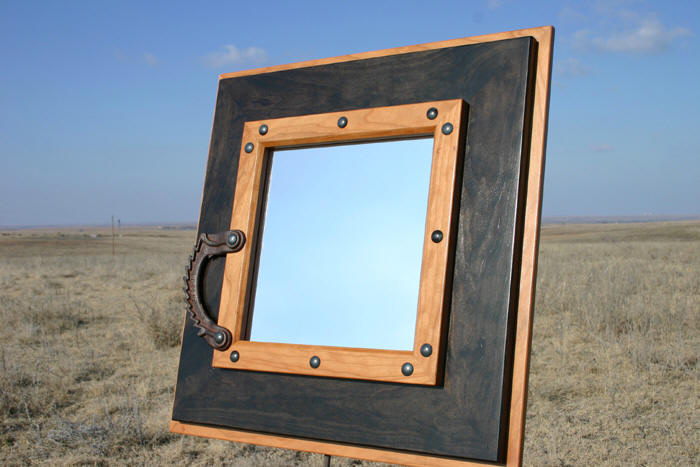
Cherry, ebonized cherry, scrap iron
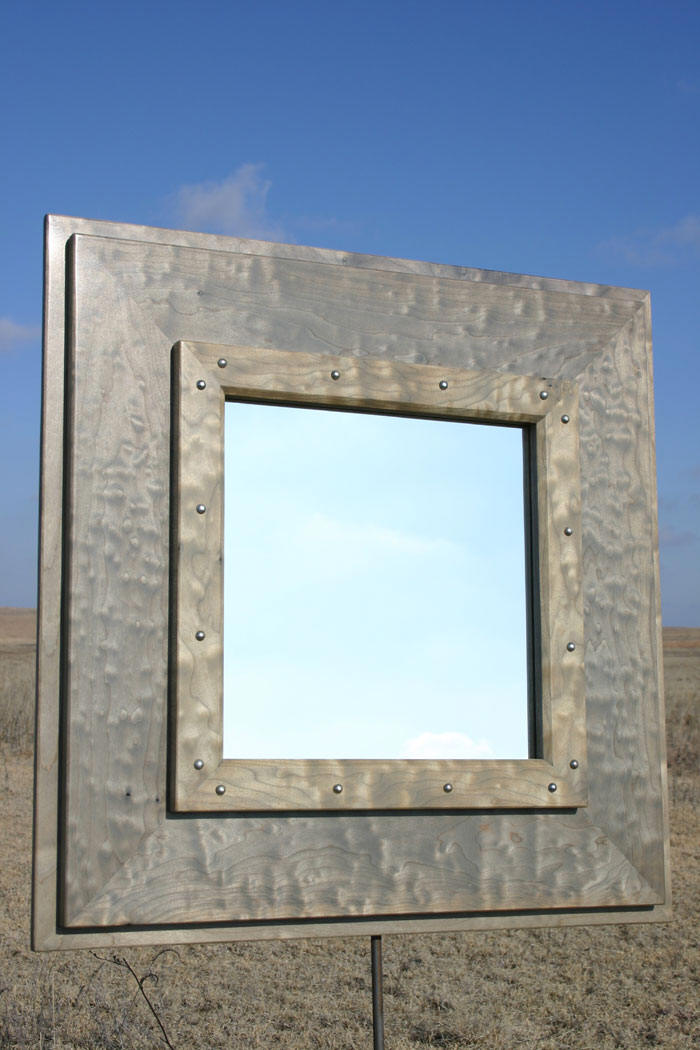
Quilted maple, steel rivets
Walnut

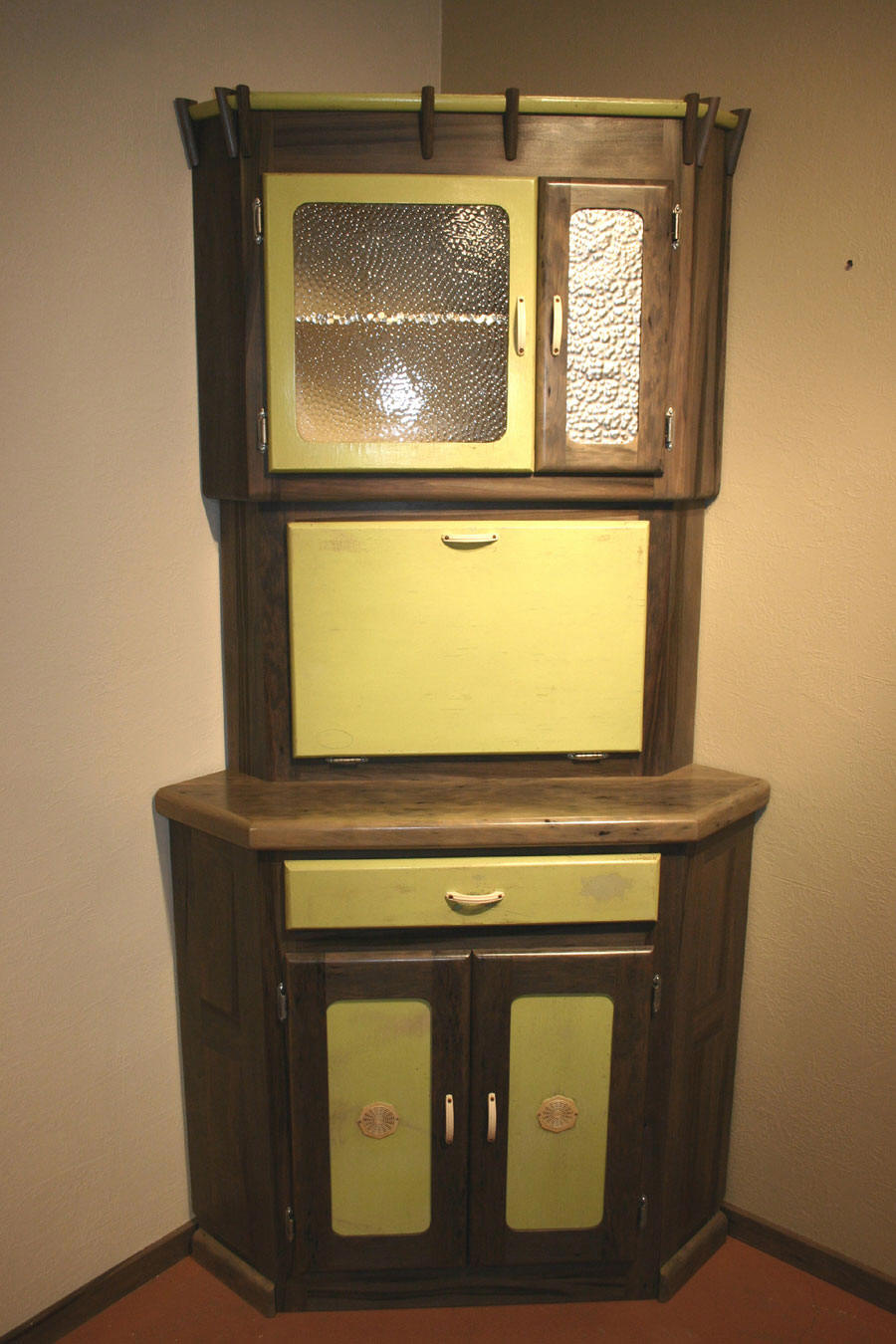
Gumwood, steel, milk paint
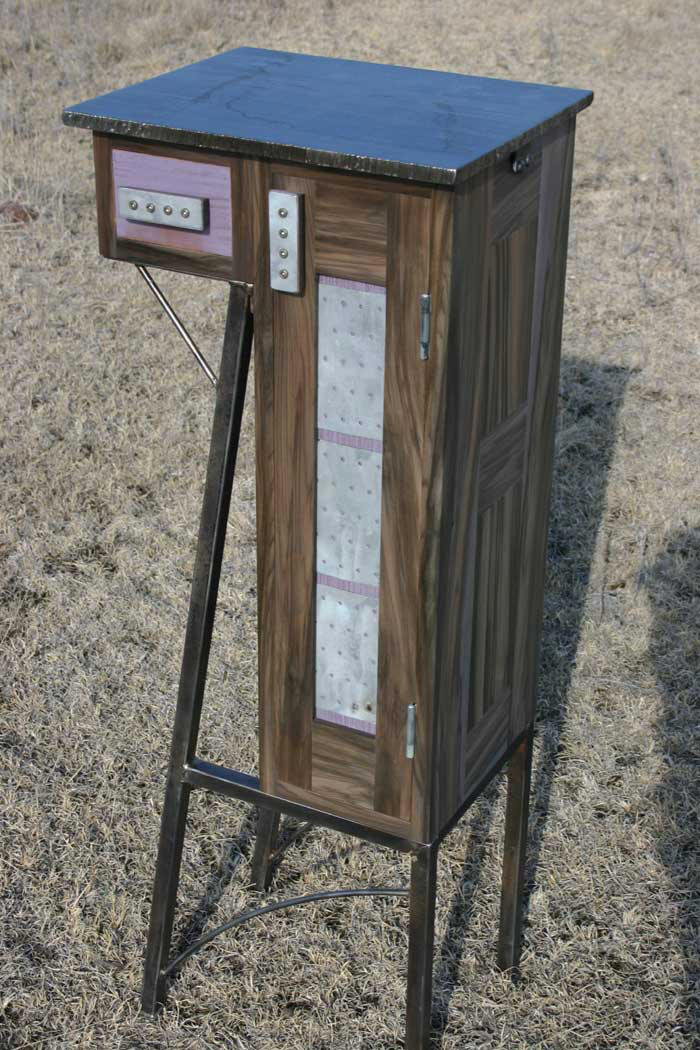
Ebonized oak, curly maple, scrap iron, plate steel

Cherry, scrap iron

Iron-ebonized oak, scrap iron, reclaimed wood
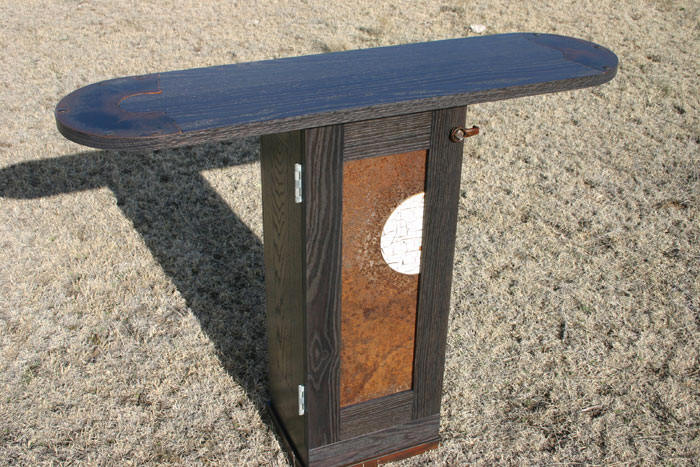
Cherry, scrap iron

Iron-ebonized gumwood, combine grain sieve, piano tension bar

Iron-ebonized gumwood, combine grain sieve, piano tension bar

Split wagon rim, cherry, & fabricated pit-blackened steel
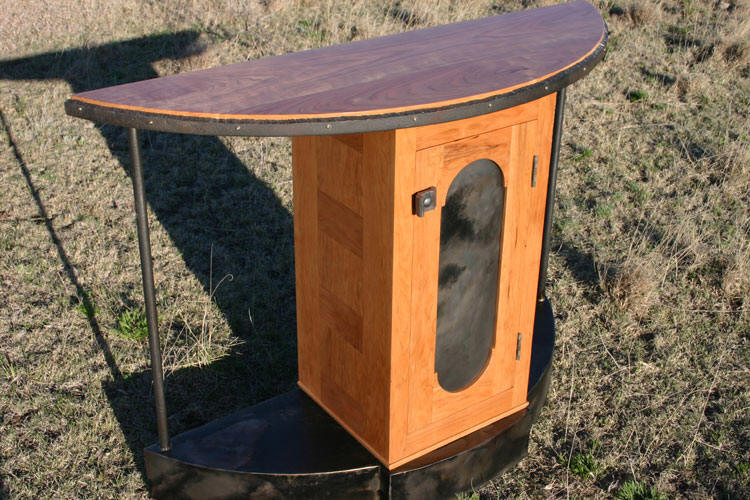
Quilted maple, plumber’s strapping, pop rivets, pit-blackened steel
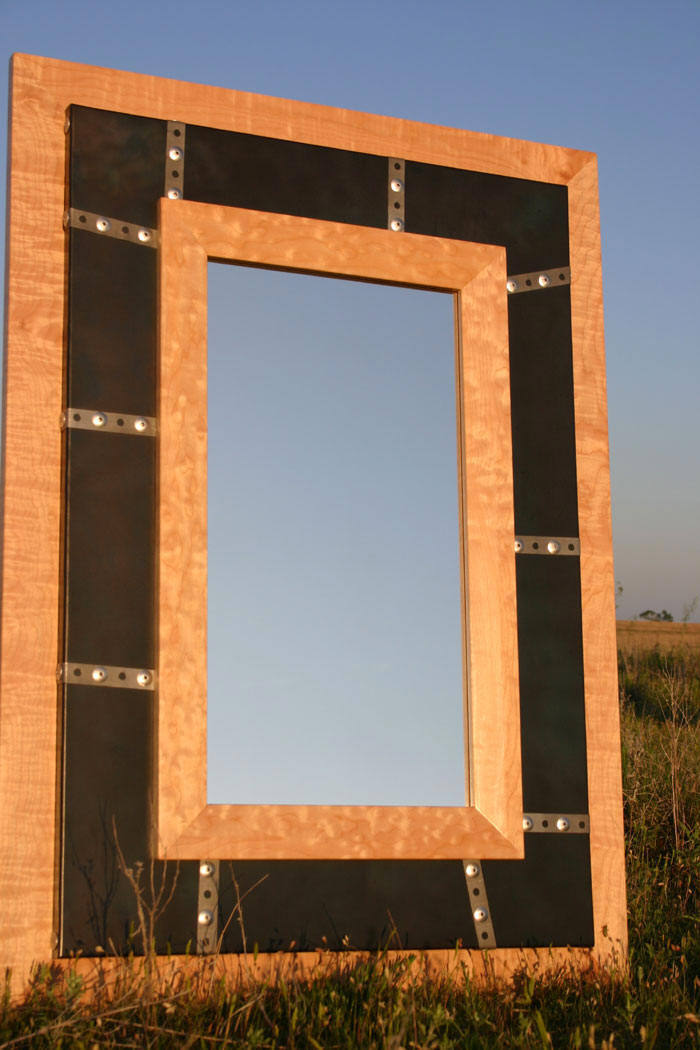
April 9, 1947, the workers pouring concrete for the grain elevators in the Texas Panhandle town of White Deer watched as a large tornado formed out of the black clouds just north of town. The tornado took off to the northeast, generally following the Santa Fe Railroad tracks. Eventually going on to destroy the Texas towns of Glazier and Higgins, and wiping out Woodward, Oklahoma, the storm stayed on the ground for a total of 256 miles. The White Deer elevators still stand between the highway and the railroad tracks, dominating the skyline of the small town. Rising part way up the ends of two of the elevator runs are tapered cyclone dust separators. Made of sheet metal with evenly spaced, horizontal “ribs,” these separators are the design inspiration for the CYCLONE cabinet.
Constructed of iron-stained sweet gum wood, the cabinet has a door panel that has been cut out of a section from a Ward’s 1500 bushel granary. A probable victim of the ’47 storm when it hit Higgins, the twisted and beat-up granary panels had been straightened out and used as siding on a milking shed. The door pull is a recycled barn door hasp.

Walnut, cherry, steel
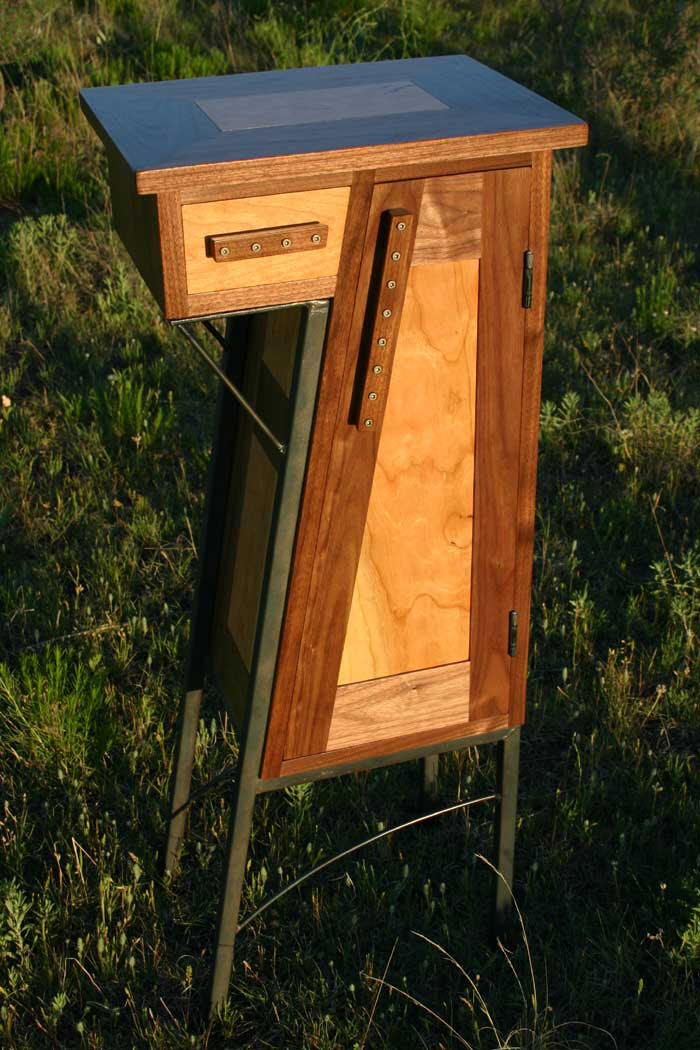
All that remained of the old freight wagon were the large, hand-forged, steel tires or rims that lay all akimbo on top of the wagon undercarriage. Only scraps of the wooden wheels hung on the rims after years of blow-sand, termites, and decay. A torch-split section of one of those iron tires now forms the frame for the BROKEN RIM SOFA TABLE.
Panels in the mesquite frames and door are cut from a much-used and abused hog feeder. The metal acquired its rich patina through use as a feeder, then a chicken feed granary—and finally, as a trash incinerator.

Iron-ebonized maple, T-iron, pit-blackened steel
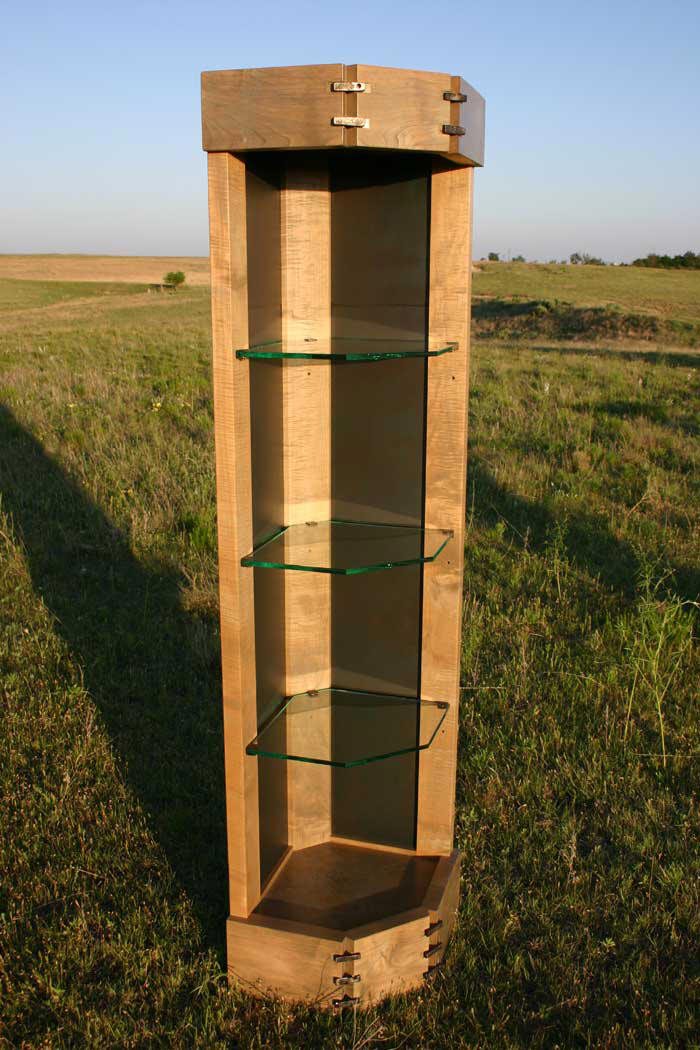
Iron-stained oak, section of John Deere combine straw walker sieve, milk paint, scrap steel

Cottonwood, iron-stained oak
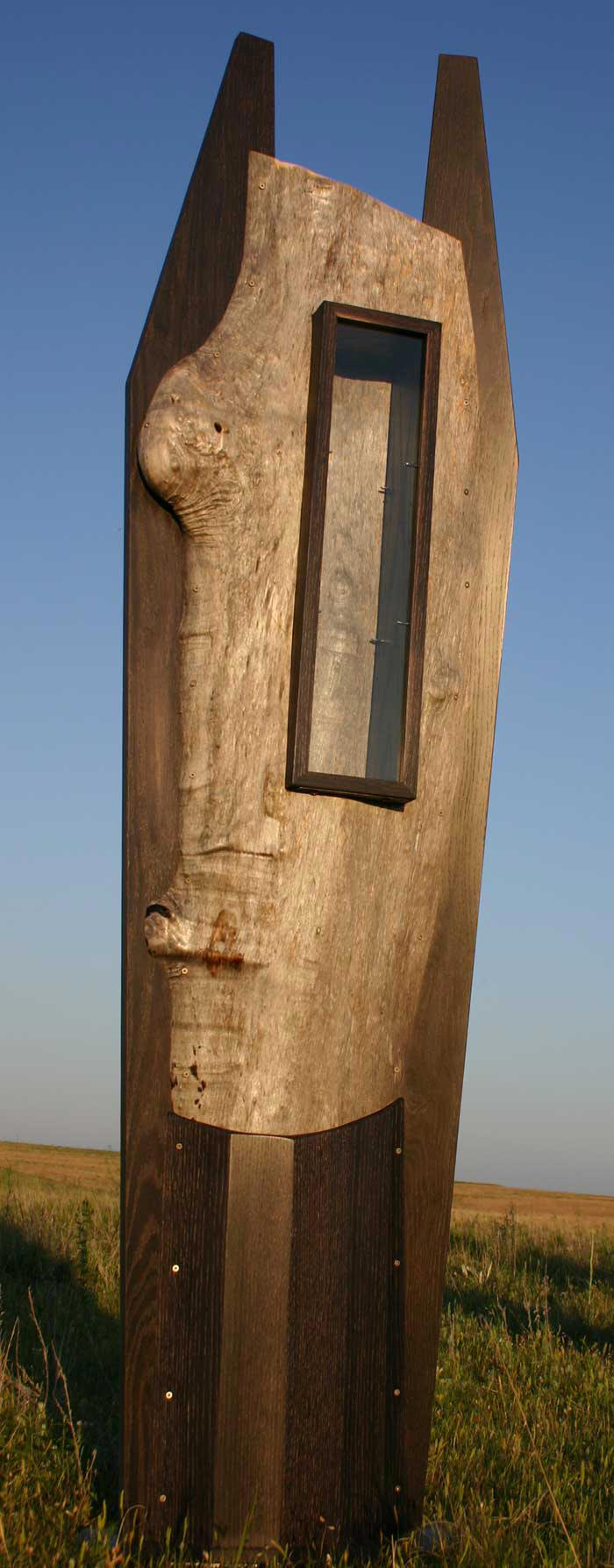
Cottonwood, iron-stained oak

Cottonwood, iron-stained oak, blackened steel, lightning rod cable

Oak, blackened steel, ribbon wire
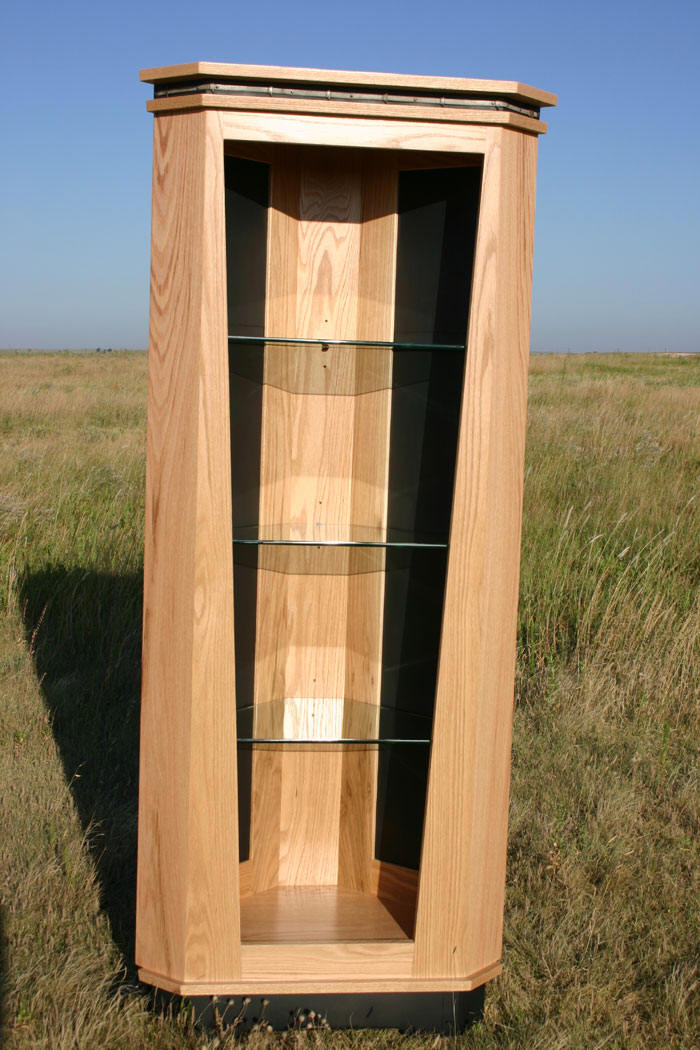
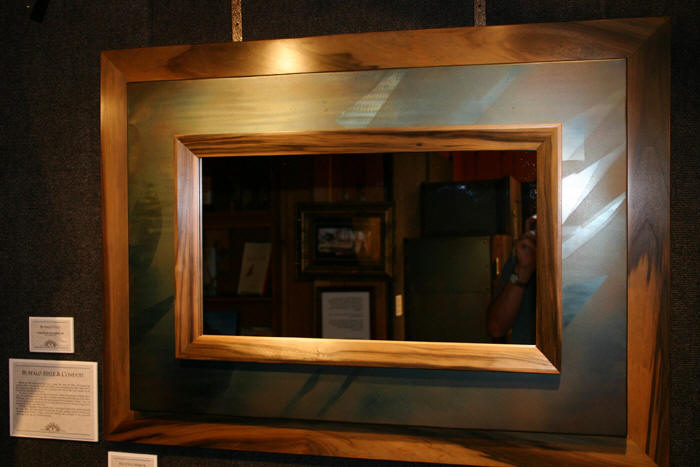
Bird’s-eye maple frames out a sandblasted and heated steel panel fabricated out of scrap from a stock trailer manufacturer. The scrap was located in a Campo, Colorado, scrap yard.
Piercing the maple rib are tines from a broken pitchfork. A tractor tire rim lug anchors the tines to the steel. The shelf below the mirror is a slice from an amboinia log, harvested out of a Viet Nam forest. The slice made it to a lumber broker in Atlanta, where an acquaintance purchased it and hauled it out to Texas, convinced he knew just the person who would know what to do with the rare wood. That was years ago.
The slice now has a special place on the ARC MIRROR.

Sweet gum, redwood, blackened steel

Mixed media

Poplar, scrap metal

Re-forged wagon tie rods, blackened sheet metal, ebonized cherry, sweet gum, baling wire

Rojo, the Rhode Island Red rooster, was an impressive critter with rusty-red crown feathers and tail. But his most impressive and dangerous features were his long spurs. It was these spurs—or rather his frequent use of the spurs—that brought about the end of Rojo’s reign as king of the chicken yard. So the name for the ROJO BAR, with its pointed, hay-rake tine stretchers, was inspired by ol’ Rojo the rooster.
The angled end-cap on the cherry top is cut from the remains of the main frame of Grandpa Bucher’s old horse-drawn sulky hay rake. Steel door and side panels are cut from stock trailer scrap discovered in Clinton Hoeffer’s Campo, Colorado, scrap yard. The panels have been sandblasted and blackened by pit-firing. Door pulls are re-forged tractor engine rods.

Cherry, rusted sheet metal, oilfield sucker rods
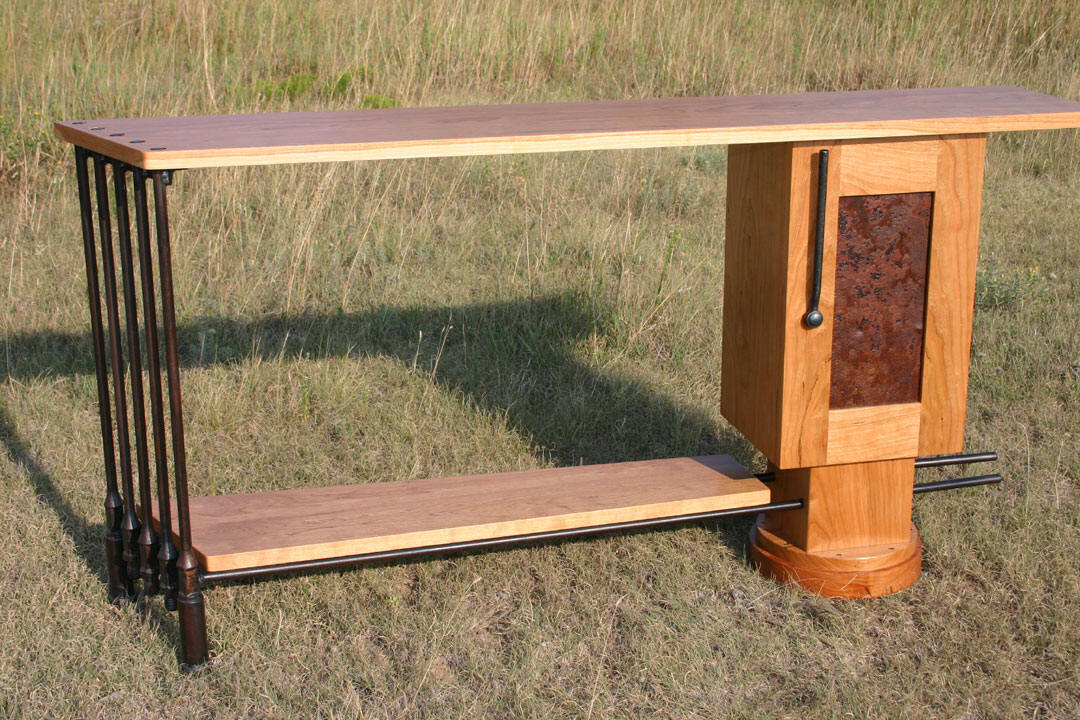
Sweet gum, redwood, blackened steel
In the protected spot south of the Lipscomb County Courthouse, the native Indian River walnut tree had thrived and grown until its shade reached from the Courthouse to the old jail. Eventually succumbing to insect damage, the old tree had to be taken down in 2002. Cut into lumber and cured out, part of the tree has become the Jailhouse Stand.
Sections of torch-split wagon tires frame the walnut. The rims were pulled from a scrap pile out on Palo Duro Creek. The door panel is woven spring steel salvaged from a security gate made by the Tex Anchor Fence Company in Fort Worth.
Stark white in the sun now, the old jail is quiet—used only for storage. But inside, back in the riveted strap steel cells—if the light is strong enough through the smoke-hazed windows—you can make out dates and names scratched in the silver paint by early-day inmates.

Mesquite and steel

Iron-stained sweet gumwood and blackened steel

Walnut, cherry, steel

Cherry, blackened steel, grain auger

The Minneapolis-Moline one-way plow always seemed like more of an instrument for torture rather than a farm implement. Built of massive steel parts, the plow had a “modern” feature of a special trip mechanism whereby a rope stretched from the trip to the back of the open-cab tractor, where the farmer—with a pull on the rope—could set the plow down in the soil, and then with another pull, raise it back up again. Sounds simple enough, but in practice it seldom worked easily—or at all; and it seemed especially contrary when I had to make a turn and try to keep from plowing out a fence. I feared arm and shoulder dislocation each time I did battle with the old M&M.
So I shed no tears of nostalgia when the worn-out plow got parked for the final time. Over the years we borrowed parts for other projects, giving me plenty of time to wonder how I could use the main spring and some of the trip workings. Finally, one day when I said the name ONE-WAY TRIP out loud, I knew the recycled pieces would become a clock.

Mixed Media

Gumwood, parts of old pie safe