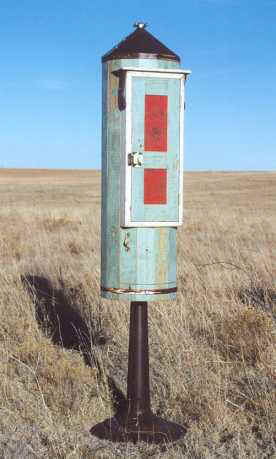
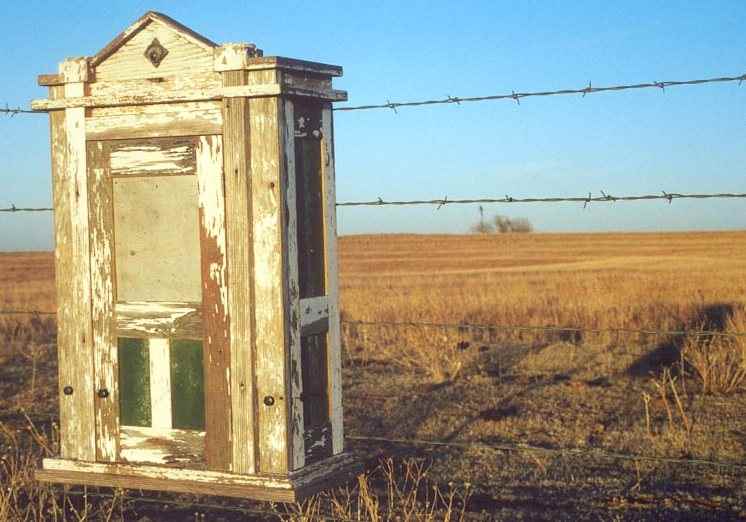
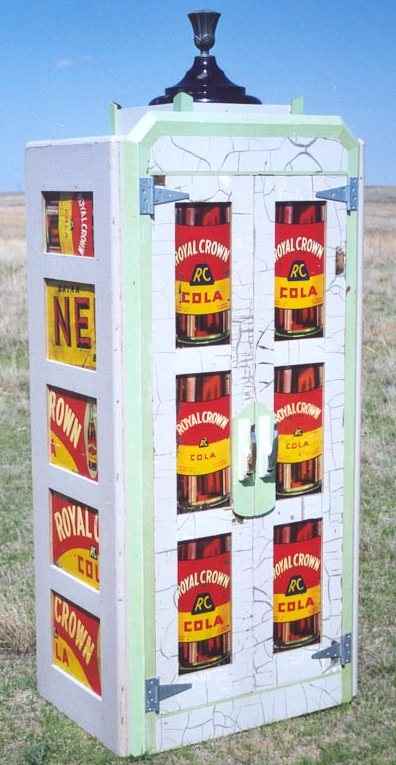
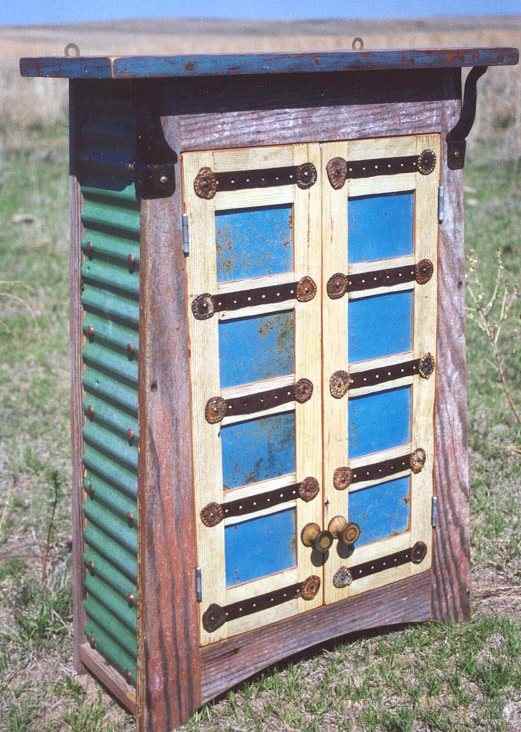
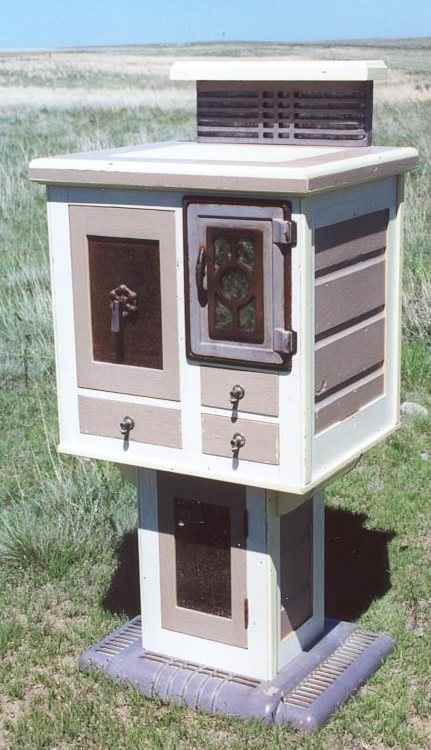
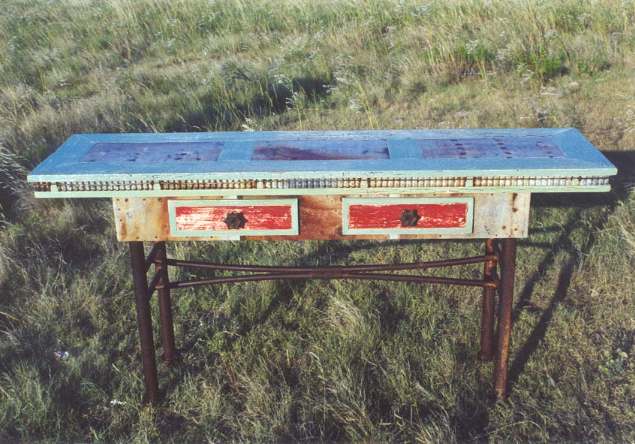
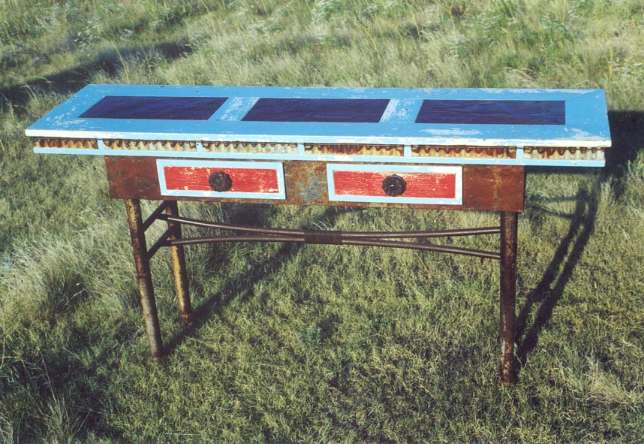
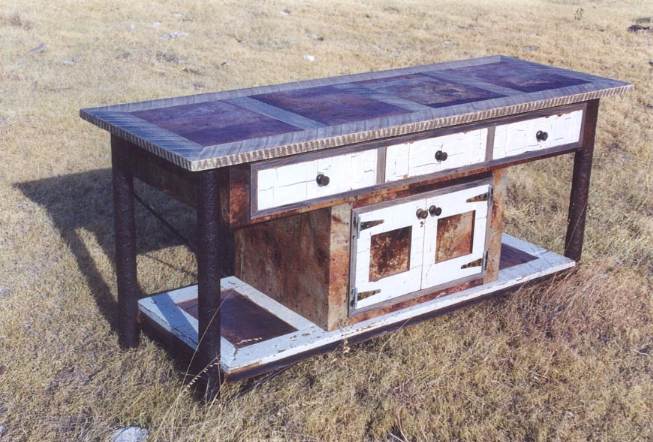
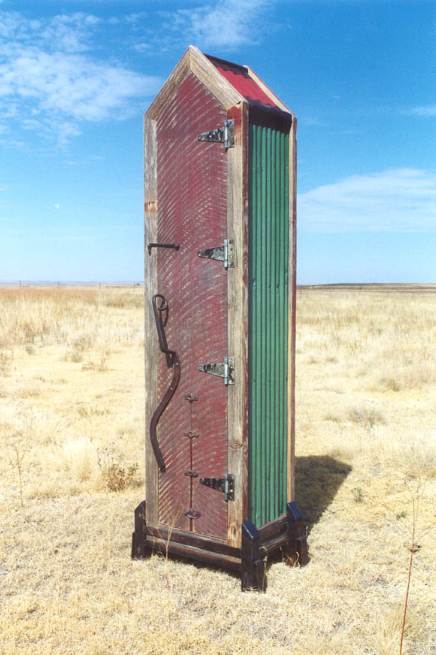
The odd assembled pieces and parts: a pair of skates, doorknobs, table remains, bottle stoppers, do not appear too promising. But each piece has a story and is part of the larger story of BJ’s family. She sends me home with this assortment and the charge to see what I can put together. I decide not to take the carpenter’s level standing in the corner by the door. I cannot picture how it could work into a future piece of furniture, or bear the thought of cutting a level in two.
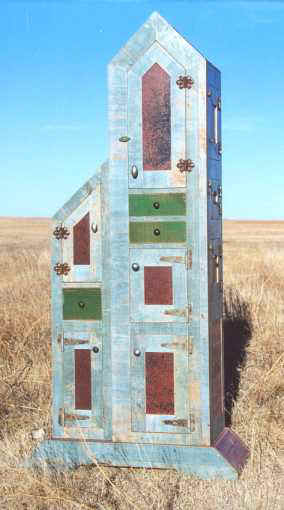
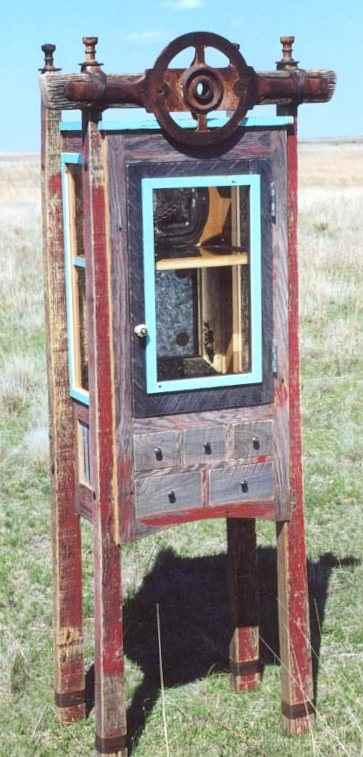
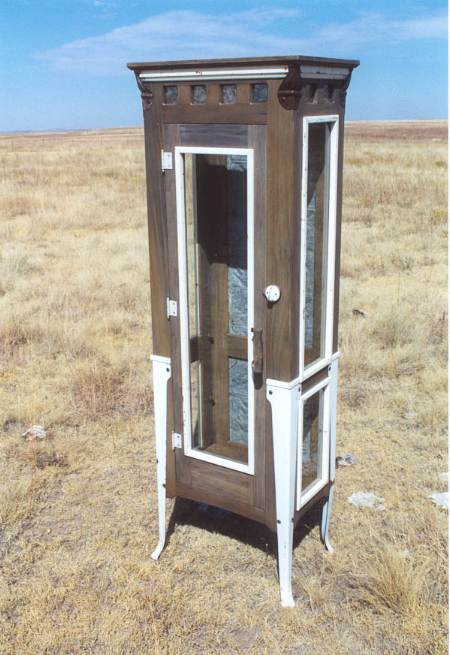
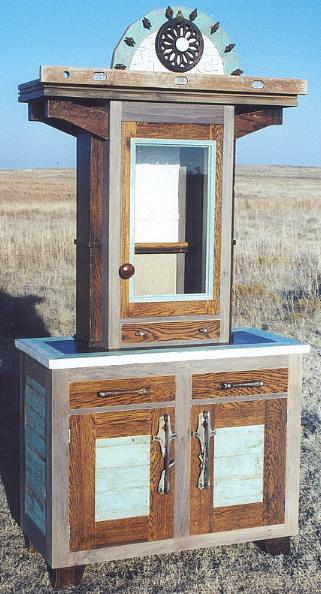
Eventually, all the family story parts are spread out in the studio and the oak table remains become the takeoff point for the design. BJ’s Great-Uncle Alex made the table for his bride, Francis. After a year of marriage, Francis and Alex decided it just wasn’t working out, so rather than get a divorce, Alex bought the house next door and Francis moved in—table and all. They remained good friends, husband and wife, eating every meal at the table. They lived out their lives this way. The base of the old table becomes the top columns and corbels for the On The Level tall chest. And the tabletop provides enough material for second-life doors and drawer fronts.
In order to have the turquoise and white accent colors for the tall chest, as well as enough case lumber, reclaimed interior trim from the Hostutler homestead down the road from us in Lipscomb County, Texas is combined with Great-Uncle Alex’s table. The Hostutlers raised nine children in the small, but sturdy, house. My wife’s Aunt Mary tells the story from her childhood of how the Hostutlers, being Nazarenes, would gather with a small group of their brethren for evening services in the old Prairie View school house. Aunt Mary and Uncle Herman would sneak across the east field and peer through the school windows hoping to be entertained “by all sorts of holy-rollin’ and wild goin’s on.” If they saw Mrs. Hostutler kick off her shoes, then they knew the show was about to start.
As the case for On The Level comes together, I realize there is a remote chance that the left-behind level might work into the design. Still though, I am loath to cut the level up, and I am afraid it will be too long for the piece. I call BJ anyway and request that the level be sent.
In the meantime, other odd parts find a home on the chest. Bottle stoppers or caps line the top crown and provide pulls for the top drawer. BJ’s Grandfather Gadzichowski cut ice on the Milwaukee River in the winter for the Milwaukee Ice and Coal Company. He was given so much ice per day to deliver. If at the end of the day he had ice left, called “shrinkage,” he could sell it and make a profit. With that profit he would buy beer for himself and root beer for his children. The caps were collected in an old coffee can and stored in Grandfather Gadzichowski’s basement.
Ice skates that the same grandfather used to skate the Milwaukee River become door pulls. BJ’s Dad inherited the skates when he was a little boy, but he hated the skates because they were “old-fashioned” looking and didn’t work too well as a hockey skate. But the family was poor and it was all he had to skate on.
Porcelain doorknobs on the cabinet come from Grandfather Gadzichowski’s sun porch. His eldest daughter, Suzanne, contracted tuberculosis when she was young. They built the sun porch in hopes that by lying in the cold, sunny area, she’d be cured. Ironically, Aloysius, their eldest son, had a stroke and died in the sun porch when he was just 44. Suzanne recovered.
The stove plate joined with the white doorknob at the top of the cabinet came from an old stove in Grandfather Gadzichowski’s basement. An old stove in Great-Aunt Francis’s house provided the plate handles for the main drawer pulls.
The white plaster relief inside the cabinet, a gift to Gordon and BJ for their wedding in 1974, is from Jules Orlandini, one of the few creative plasterers in the U.S. The relief is from the ceiling of a Frank Lloyd Wright structure in Chicago.
The level arrives. It doesn’t seem long enough as I remove it from the mailing tube; I am expecting a four-foot level. I hold the level up to the nearly completed cabinet. The length of the level equals the width of the cabinet. Only forty-two inches, a mason’s level, it belonged to BJ’s Grandfather Schmitt. He was a mason and a carpenter who helped build St. Josefat’s Basilica in Milwaukee. BJ has no photograph of Grandfather Schmitt. She has only the level.